What on the Site
The Zam Tiberias – a city inhabited in Roman, Byzantine and Roman periods.
The site was exposed to the ruins of Jewish synagogues, some of which were restored.
This national garden is located near the Tiberias, on the side of the road that goes across Tiberias south.
There are 17 hot springs.
Khamenei was known as a hot spring area for the clinic, even before the conquest of the land by Joshua.
At the time of the settlement of the tribes of Israel, the south of the fortress cities of the Naftali tribe, to the western coast of the Sea of Galilee.
When Tiberias were raped by Herod Antips, in 20 AD, she was famous as a resort town.
The Romans established elaborate rams that attracted resorts from all over the Empire.
Even in the 18th and 19th centuries, we were built in a pile.
When people ” the work-and-quot; paved the Tiberias-veget road in 1920-1921, they discovered the remains of the site.
In 1921, Saloshz was dug in the north of the site and discovered a small house from the hundreds to five CE.
About 40 years later, several hundred meters south were discovered – remains of additional synagogues.
From 1963 to 1961, excavations were conducted in the management of M.D., on behalf of the ancient wing.
In the southern part of the city, synagogues built on top of this, the first probably in the 4th century and destroyed in the 5th century AD.
Sores was appointed with the founders of this synagogue and was a source of the presidents of the Sanbridrin in Tiberias.
The walls of a synagogue were trampled in the Messiah and a magnificent mosaic in his desire were reinstated three inscriptions in Greek, one address in Armenians and Hebrew words that were incorporated in the zodiac, some of them embedded.
At the top of the mosaics in the middle hall are described as a sacred closet and displaying lamps of seven nests, as well as the four species, suffer and more.

In the zodiac below it, the figure of Helios is described to the sun driving in the chariot.
All this indicates the holistic impact on the designers of these synagogues.
The synagogue annexed a courtyard, which was home to the Midrash, a guest house and a bar of shops along the street.
At the southern end of the excavation area, a section was exposed from the walls of the Old City, on its hair and two towers.
There was a street leading from the gate to the city.
These findings are from the Talmud.
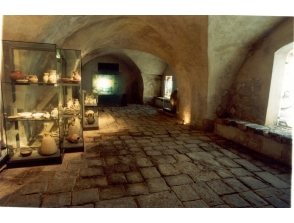
At the entrance to the site, a museum dedicated to the history of the Khatya was established.
Khai-Titania, a national Sea of Galilee for Israel, Africa-Israel, and more, established the museum named after Dr. Ernest Lihman.
The museum is part of the National Garden, operated by the National Park Authority.
She who improved the site, planted a garden and trained the place for the audience.
Address: The Kaplan Boulevard, Tiberias
Phone: 04-6725287